
Introduction
For generations, rote learning has been a common approach in math classrooms. This approach focuses on key information retention through constant repetition and memorisation techniques until it becomes second nature.
But what is the real meaning of rote learning, and how does it impact students’ maths learning journey? The answer lies in the process. While this method can help students quickly recall formulae or procedures, it often falls short when they are faced with new or complex problems.
To truly excel in mathematics and develop lasting problem-solving skills, students need more than memorisation. They require comprehension, critical thinking, and the confidence to adapt familiar methods to unfamiliar situations. Let’s explore what the meaning of rote learning reveals about its characteristics and limitations.
Key Takeaways:
- What Does the Meaning of Rote Learning Reveal About Math Education?
The meaning of rote learning highlights its focus on repetition and memorisation without deeper understanding. While it helps with quick recall of formulas or facts, it often leaves students unprepared for higher-order problem-solving.
- Why Is Rote Learning Still Common in Classrooms Today?
Despite its drawbacks, rote learning remains prevalent due to its time efficiency, traditional teaching practices, and exam-driven culture. It is often seen as a reliable way to secure short-term results, especially in high-stakes testing environments.
- What Are the Main Limitations of Rote Learning in Mathematics?
The meaning of rote learning highlights its heavy reliance on repetition without deeper comprehension. The process can lead to shallow understanding, poor adaptability, fragile memory, and even reinforced misconceptions. Without context, facts are remembered in isolation, making it difficult for students to link ideas across different math topics.
- How Does Meaningful Learning Differ from the Meaning of Rote Learning?
Different from the meaning of rote learning, meaningful learning emphasises comprehension, conceptual links, and real-world application. It builds long-term retention, logical thinking, and adaptability, helping students understand why formulas work rather than just memorising how to use them.
- How Do MOE and Sirius Mathematics Move Beyond the Meaning of Rote Learning?
Both MOE and Sirius Mathematics frameworks emphasise reasoning, problem-solving strategies, and conceptual clarity through approaches like the CPA model. By shifting the focus away from the limitations defined by the meaning of rote learning, they prepare students not only for exams but also for lifelong mathematical thinking and application.
Understanding the Meaning of Rote Learning
What Does Rote Learning Mean in Math?
Rote learning is essentially the practice of committing information to memory through repeated drills, without necessarily developing a deeper understanding of its meaning. In mathematics, this usually takes the form of drilling multiplication tables, reciting formulas, or practising the same procedures habitually.
While this method can be effective for short-term retention, it does not necessarily foster true comprehension. For instance, a student may remember the quadratic formula by heart, but still struggle to understand when or why it should be applied. This gap between recall and understanding is where rote learning shows its limitations. Some parents choose to enrol their children in math tutoring to provide additional support beyond the classroom. Tutors can offer personalised guidance, helping students retain knowledge effectively to tackle challenging topics.
Why Is Rote Learning Still Prevalent?
Despite its shortcomings, rote learning remains a common practice in math classrooms around the world. This is because in many traditional education systems, repetition is still viewed as a reliable pathway to mastery, especially in high-stakes, exam-driven cultures.
In this section, we share several factors that explain its persistence:
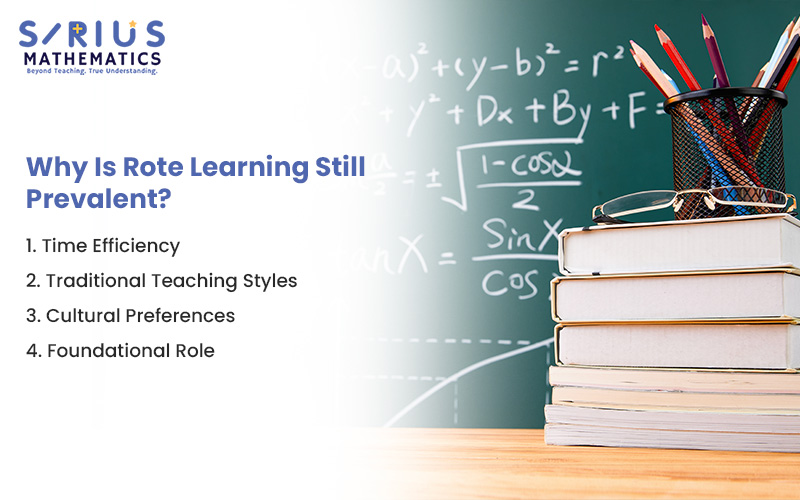
1. Time Efficiency
Rote memorisation is a fast way to prepare for exams or quizzes that prioritise speed and accuracy. Students can quickly recall formulae and facts without pausing to analyse or interpret them.
2. Traditional Teaching Styles
Many teachers continue to rely on established methods passed down through generations. In some cases, the emphasis is placed more on exam performance than on nurturing deep conceptual understanding in maths.
3. Cultural Preferences
In exam-driven education systems, particularly in parts of Asia, repetition is often equated with discipline and achievement. Mastery through memorisation is seen as a dependable route to high scores.
4. Foundational Role
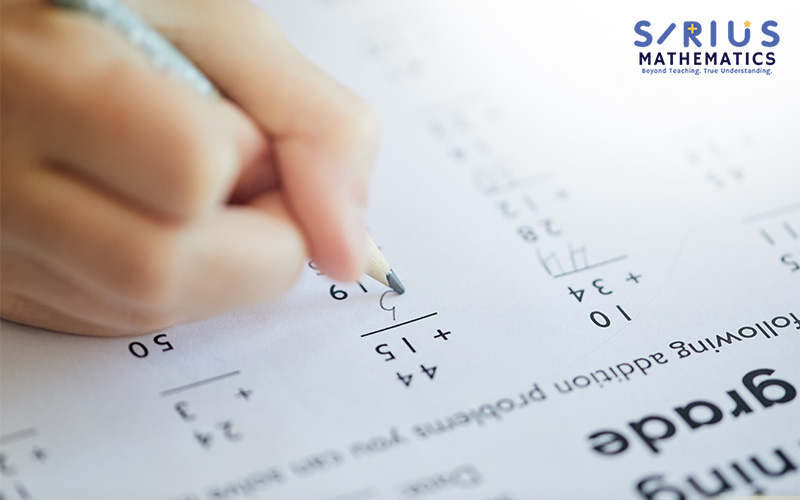
The meaning of rote learning is not just about memorisation; it can act as a stepping stone in mathematics. By internalising the basics through repetition, students may find it easier to approach more complex problem-solving questions later on. For instance, automatic recall of multiplication tables can free up cognitive capacity for higher-order tasks.
What Are the Limitations of Rote Learning?
After understanding the meaning of rote learning, we now look at its limitations. The process may help students quickly memorise formulas and recall basic facts with ease. However, its usefulness is limited, and overreliance on this method can hinder long-term mathematical growth.
1. Shallow Understanding
Students may be able to recite formulae or follow steps mechanically, but they often lack insight into why those methods work. This weakens their grasp of core concepts.
2. Poor Adaptability
The meaning of rote learning revolves around repetition and memorisation without deeper understanding. While this may help with routine tasks, it often leaves students unprepared when they encounter unfamiliar problems. In such situations, they struggle to think flexibly and adapt these strategies.
3. Fragile Memory
When information is learned purely through repetition, it is stored in short-term memory. Without regular practice, these memorised facts gradually fade, leaving gaps in knowledge.

4. Risk of Misunderstanding
Without context or explanation, repetition can cause students to memorise incorrect steps or reinforce misconceptions. For instance, a student repeatedly solves linear equations by incorrectly moving terms across the equal sign without changing their signs. Once a mistake is embedded in the student’s memory, it becomes difficult to replace with the correct method.
5. No Conceptual Link
The Singapore maths curriculum emphasises conceptual understanding and the use of mathematical reasoning strategies. When students only memorise, they tend to remember facts isolatively without seeing how they connect to bigger math ideas. This creates difficulties for students when they need to link ideas across different topics. Recognising this gap, some math tuition in SG reinforces classroom learning by guiding students to see these connections more clearly and develop stronger problem-solving skills.
Rote vs. Meaningful Learning: What Are the Differences?
To understand the meaning of rote learning is insufficient on its own, it’s important to compare it with meaningful learning. Distinguishing the two highlights why a balance is essential in helping students succeed in both exams and real-life situations.
Unlike rote learning, which emphasises the meaning of repetition, meaningful learning focuses on comprehension and the ability to make sense of concepts. Instead of simply remembering formulas, students learn why those formulae work and how they connect to other ideas. This deeper approach:
- Builds long-term retention by linking new knowledge to existing understanding.
- Strengthens problem-solving and logical thinking, allowing students to tackle unfamiliar or complex problems.
- Encourages real-world application, helping learners see how mathematics is used beyond the classroom.
- Makes learning more engaging and adaptable, as students can transfer their skills to different contexts.
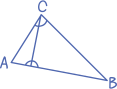
Rather than just memorising the formula for the area of a triangle, meaningful learning encourages students to explore why the formula works. For instance, an E-Maths tutor might guide students to see how the formula relates to the area of a rectangle, showing that a triangle is essentially half of a rectangle. From there, the tutor can extend the concept to real-life applications, such as calculating the area of a plot of land or designing a triangular structure.
When to Use Each
Both rote learning and meaningful learning play important roles in mathematics. The meaning of rote learning is valuable for building strong foundations, such as memorising multiplication tables or basic formulas. These cases often require speed and quick recall. On the other hand, meaningful learning is crucial for true mastery. It enables students to analyse concepts, make connections across topics, and apply their knowledge flexibly to new situations. For Singapore students, balancing these methods is key to excelling in both exams and future mathematical challenges.
Singapore Context: MOE’s Shift Away from Rote Learning
How MOE Shifts Away from Rote Learning
Over the years, Singapore’s Ministry of Education (MOE) has deliberately shifted its math curriculum away from the traditional meaning of rote learning. While foundational knowledge and recall remain important, the emphasis is now on helping students understand, reason, and apply mathematics meaningfully. This shift ensures that students are well-equipped to think critically and adapt their knowledge to real-world challenges. Notably, Assessment Objectives (AO1–AO3) ensure students are evaluated not just on memory but on their reasoning, application, and problem-solving skills.
What are the Key Focus Areas in the MOE Math Syllabus?
1. Reasoning and Communication
Students are encouraged to do more than just give the right answer. They are expected to justify their solutions, explain their mathematical reasoning, and communicate ideas clearly. This cultivates not only accuracy but also confidence in expressing mathematical thought.
2. Heuristics and Problem-Solving Strategies
Instead of relying on memorised formulae or rigid steps, the curriculum focuses on heuristics and systematic strategies. These include drawing diagrams, making assumptions, or working backwards. The syllabus prepares students to tackle unfamiliar and non-routine problems, building resilience and adaptability in problem-solving.
3. Conceptual Clarity with the CPA Approach
One of the defining features of the Singapore math curriculum is its use of the Concrete–Pictorial–Abstract (CPA) approach. It is a structured method that builds deep conceptual understanding step by step.
- Concrete: Students first learn through hands-on activities using real objects, which grounds abstract concepts in tangible experience.
- Pictorial: They then move to visual models, such as bar diagrams or graphs, to bridge concrete understanding with abstract ideas.
- Abstract: Finally, students apply traditional symbols, equations, and notations with confidence, having already built a solid foundation of meaning.
This structured progression ensures that learning is not just memorised but truly internalised. It moves beyond the limits of what rote learning means, which is repetition without deeper understanding.
What are the Assessment Objectives (AO1, AO2, AO3)?
The MOE assessment framework also reflects this philosophy:
AO1: Recall and apply mathematical concepts. This involves testing the basics that are often supported by rote learning.
AO2: Interpret and apply concepts in familiar situations. The key is to ensure students understand and can transfer knowledge to standard problems.
AO3: Solve unfamiliar, higher-order problems and explain reasoning. This pushes students to think critically, reason logically, and communicate effectively.
By shifting away from rote learning, MOE places a stronger emphasis on developing flexible thinkers who are prepared for challenges beyond the classroom. This three-tiered structure ensures that students are assessed not just on what they can remember, but on how they think, apply, and extend their knowledge.
How Sirius Mathematics’ Framework Supports Deep Learning
As Singapore’s MOE continues to shift the focus of math education away from rote memorisation and towards higher-order thinking, Sirius Mathematics has designed a Mathematical Analysis Framework to align with these evolving standards. Understanding the meaning of rote learning highlights why this shift is necessary. The framework ensures that students do not simply memorise formulas for exams but instead develop the ability to reason, analyse, and apply concepts in meaningful ways.
For Singapore students preparing for PSLE or O-Level exams, combining rote and meaningful learning is crucial for exam success and long-term mastery. By balancing conceptual mastery with analytical problem-solving, Sirius Mathematics equips students with the skills they need for long-term success in both school and real-world contexts.
What Core Concepts Students Learn
- Concepts
Students build a solid grasp of the fundamental ideas and principles that underpin mathematics, giving them a strong foundation to tackle more complex topics.
- Logic
Emphasis is placed on clear, step-by-step reasoning, helping learners understand not just the answer but also the thinking process that leads to it.
- Abstraction
Students learn how to recognise essential patterns and general principles, while filtering out irrelevant details, a key skill in higher-order problem-solving.
- Algorithms
Rather than memorising procedures, students are taught to understand and apply systematic methods, making them more adaptable when solving varied problems.
- Patterns
By identifying recurring structures in numbers, shapes, or data, students develop the ability to connect concepts and apply them across different areas of math.
What are the Student-Centred Learning Approaches?
To support deep understanding, Sirius Mathematics also integrates student-centred learning approaches that actively involve learners in their own progress:
- Tinkering
Students engage in hands-on exploration and trial-and-error learning, which encourages curiosity and self-discovery.
- Creating
They construct original solutions, develop models, and express mathematical thinking creatively, moving beyond standard textbook answers.
- Debugging
Mistakes are reframed as learning opportunities. Students reflect on their errors, refine their approaches, and strengthen problem-solving resilience.
- Collaborating
Through group discussions and peer learning, students gain exposure to different perspectives and strategies, preparing them for real-world teamwork and communication.
Frequently Asked Questions
1. Is it bad to memorise formulae in math?
No, but it’s not enough. Memorising helps with speed, but students also need to understand why formulae work and how to apply them in different situations.
2. How can I help my child move beyond rote learning?
Ask “why” questions, use visuals, link math to daily life, and encourage explanations. Provide opportunities to apply concepts in different contexts, including calculating discounts, planning travel distances, or solving puzzles. For supplementary support, consider personalised guidance from maths tutors in Singapore.
3. What teaching methods improve math understanding?
To move beyond the limitations defined by the meaning of rote learning, educators use the CPA teaching method, problem-solving strategies, math discussions, and spaced practice. They focus on helping students see patterns and understand concepts, not just remember steps.
Conclusion
Rote learning is the starting point, not the finish line. Students need balanced math instruction that nurtures both accuracy and deep understanding to ace maths. By recognising the meaning of rote learning, we can see why it must be complemented with meaningful learning that builds reasoning, problem-solving, and adaptability.
Sirius Mathematics’ tuition programmes go beyond memorisation. Our O-Level A-Maths tuition and other lessons are designed to strengthen fluency while fostering true comprehension. We are committed to equipping students with the tools they need not only to perform well in examinations but also to think critically with mathematics throughout their academic journey.
Choose effective tutoring with us. Get in touch to benefit from our guidance and support.