

Introduction
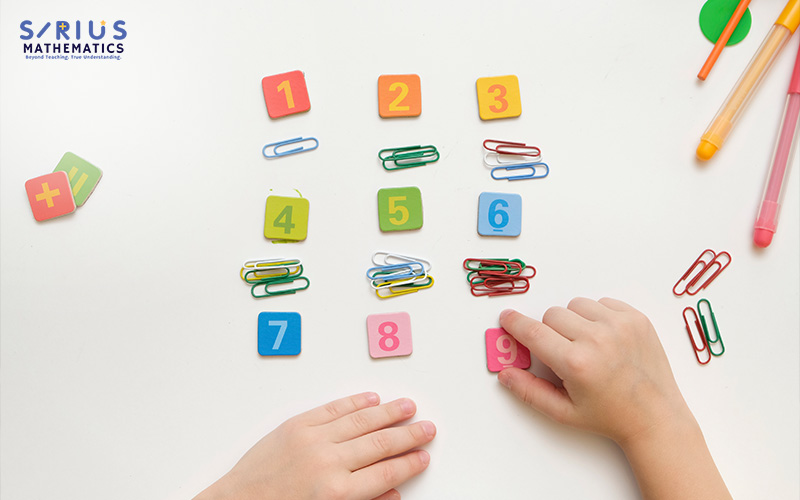
In the early stages of learning maths, children are not only solving sums but also beginning to understand how to think with numbers. This ability, often described as number sense, is what allows students to recognise patterns, estimate with confidence, and adapt strategies when faced with unfamiliar problems.
In Singapore’s primary school classrooms, number sense forms the foundation for mathematical success. Strong numeracy skills development equips students to navigate the PSLE Maths syllabus with ease, while also fostering higher-order thinking that prepares them for future learning. Instead of relying solely on memorisation, children who develop number awareness learn to reason, make connections, and approach maths with confidence and flexibility.
This article focuses on the definition and importance of numerical literacy. More importantly, it helps parents understand how primary school students can strengthen their numerical intuition and grow into resilient, independent problem-solvers. At the same time, it highlights targeted support from a primary math tuition centre in Singapore in enriching students’ learning journey.
Key Takeaways:
- What is Number Sense?
It means a child’s intuitive feel for numbers, exploring how they behave, relate, and can be used flexibly. It includes estimation, mental calculation, place value, and part–whole understanding.
- How Does Number Sense Grow?
- It begins early (e.g., subitising) and strengthens through repeated, meaningful experiences that move from Concrete → Pictorial → Abstract (CPA).
- In schools: Use manipulatives and visual models, run brief number talks, teach multiple strategies, and build in quick “sense checks.”
- At home: Play number-rich games, use everyday tasks, practise quick mental maths/estimation, and discuss thinking.
- How Can You Spot Strong (or Weak) Number Sense Early?
- Strong signs: uses multiple strategies and explains reasoning; confident mental arithmetic; solid place value; applies methods flexibly to new problems.
- Weak signs: finger-counting beyond P1; struggles with word problems; accepts unreasonable answers; misses patterns or part–whole links.
Understanding Number Sense and Its Importance
What Does It Mean?
Most parents may assume number sense is simply about counting or recalling multiplication tables. But in reality, it is the intuitive understanding of how numbers work, connect, and can be applied flexibly in both classroom learning and everyday life.
What are the Key Components?
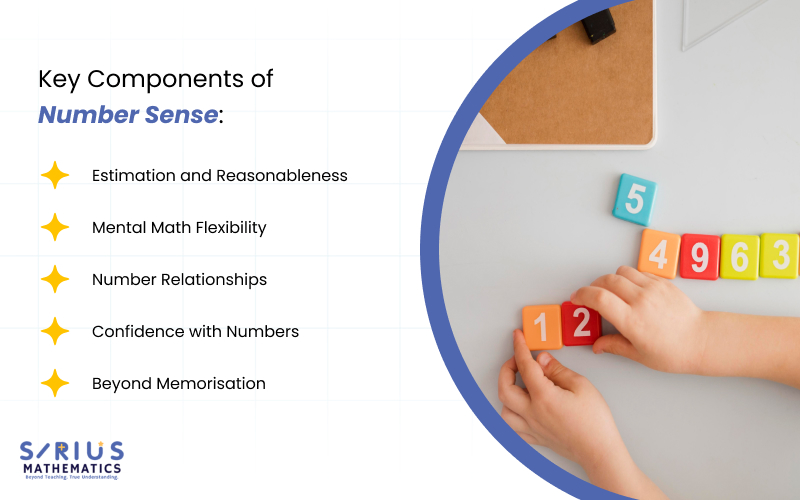
Number sense is made up of several interconnected skills that transcend simple counting or memorisation. Together, these skills pave the way for mathematical understanding and help children tackle maths problems confidently:
1. Estimation and Reasonableness
The ability to make sensible guesses and judge whether an answer seems realistic.
2. Mental Math Flexibility
Leveraging flexible thinking in maths to solve calculations without relying only on pen-and-paper methods. Through the use of mental math strategies, children can approach problems more creatively and efficiently. Some parents may even consider the guidance of math tutoring, so that their child can learn to strengthen these skills.
3. Number Relationships
Recognising patterns, connections, and part-whole relationships. For instance, knowing how to break 10 into 7 and 3.
4. Confidence with Numbers
Feeling comfortable working with numbers, testing ideas, and taking risks without fear of mistakes.
5. Beyond Memorisation
Unlike rote learning, true number sense focuses on understanding and applying concepts meaningfully.

When and How Does Numerical Literacy Develop?
1. Early Beginnings
Numerical literacy begins surprisingly early, sometimes as young as age two. Simple experiences like recognising small sets of objects without counting (a skill called subitising) mark the starting point of numerical understanding. For example, a toddler may instantly see that three apples are more than two without needing to count them one by one.
2. Built Through Experience
Number awareness grows gradually through exposure, practice, and real-life application. Everyday experiences such as sharing snacks equally, comparing which container has more water, or playing simple board games all strengthen a child’s numerical intuition. In addition, hands-on tools like counting beads, abacuses, or visual aids help students move from concrete understanding to more abstract reasoning.
3. Effective Teaching Strategies
Strong number sense doesn’t happen overnight. It’s important to ensure your child receives consistent guidance and benefits from the right teaching approaches. The following effective strategies help nurture reasoning, creativity, and real-world application, so that children can see maths as both meaningful and practical.
- Blend Traditional and Exploratory Methods
While worksheets and drills build fluency, pairing them with visual models, manipulatives, and puzzles deepens understanding.
- Encourage Reasoning Over Memorisation
Asking “Why does this work?” or “Does your answer make sense?” promotes flexible thinking.
- Use Play and Real-life Contexts
Games, physical activities, and everyday scenarios make maths engaging and relatable. These elements reinforce that numbers are not just abstract symbols but useful tools in daily life.
How to Recognise Strong (or Weak) Number Sense
Once we understand how number sense develops and why it matters, the next step is recognising it in children. Some students demonstrate a solid foundation, while others may show early signs of difficulty. If these challenges go unnoticed, they can gradually make mathematics more difficult as the child progresses.
What are the Indicators of Strong Number Sense?
- Uses multiple strategies to solve problems: Can approach the same question in different ways and explain their reasoning.
- Confident with mental arithmetic: Quickly calculates in their head without over-relying on written methods.
- Understands place value: Recognises how numbers can be broken apart. For example, 356 can be split into 300 + 50 + 6.
- Applies maths flexibly and intuitively: Adapts strategies based on the situation rather than following one rigid method.
What are the Common Signs of Weak Number Sense?
- Relies on finger-counting beyond Primary 1: Suggests a lack of fluency with basic number facts.
- Struggles with basic word problems: Difficulty translating language into numerical understanding.
- Unable to judge reasonableness: Accepts unrealistic answers without questioning the rationale.
- Difficulty recognising patterns or relationships: Fails to see links between numbers, such as how multiplication connects to repeated addition.
What Skills Does Number Sense Involve?
Having looked at the signs of weak and strong number awareness, the next step is to break down the skills that make up number awareness. These range from early, intuitive understandings to more advanced abilities that develop as students progress through primary school.
1. Early Concepts
In the early stages, number awareness develops through simple yet essential concepts. These include understanding more and less, recognising larger and smaller quantities, and grasping order: 1st, 2nd, 3rd. Children may learn to identify and compare quantities, which supports everyday decision-making. They can also connect number symbols with real-world objects, like linking the numeral “5” to five apples. These foundational skills build comparison, sequencing, and the ability to relate abstract numbers to concrete experiences.

2. Deeper Skills as Students Progress
As students progress, numerical literacy deepens into more advanced skills that strengthen their maths conceptual understanding. One of the earliest is subitising. It refers to the ability to instantly recognise small quantities without counting, such as knowing there are three dots at a glance.
Students also learn how to compose and decompose numbers, breaking them into parts and recombining them. This is an essential skill for mastering addition, subtraction, and later, algebra. Skills in sequencing and quantification further enhance understanding, allowing students to place numbers in order and connect them to real-world amounts. For instance, they know that 4 comes before 5, or recognise that 10 chocolates represent 10 actual items. Finally, symbol use becomes critical. Children learn to correctly apply mathematical symbols such as +, −, ×, and ÷ to represent numerical relationships. Together, these abilities build a deeper, more flexible grasp of mathematical concepts.
Understanding and Developing Number Sense in Primary School Students
Why Number Awareness is Critical in the Singapore Maths Curriculum
1. Alignment with the MOE Curriculum
The Ministry of Education (MOE) Primary Math Curriculum places strong emphasis on conceptual understanding, reasoning, and problem-solving. These goals cannot be achieved through rote learning alone. In fact, students need number sense to grasp how mathematical ideas connect and to apply them flexibly. With strong numerical literacy, children are better prepared to approach the curriculum’s demands with confidence and adaptability.
2. Supports Core Maths Strategies
Signature strategies in Singapore mathematics, such as number bonds, model drawing, bar modelling, and heuristics, are all grounded in number fluency. For instance, recognising part-whole relationships is essential for mastering number bonds, while flexible thinking with numbers strengthens a child’s ability to apply bar models effectively. Without number awareness, these strategies risk becoming mechanical steps rather than meaningful tools for problem-solving.

3. Prepares for Abstract Topics
As students advance in primary school, they encounter more abstract areas of maths such as fractions, algebra, and complex problem sums. A strong numerical foundation enables them to see patterns, manipulate numbers with ease, and make sense of these higher-level concepts. As topics become more abstract and complex, primary mathematics tuition in Singapore may become a form of supplementary support. It can help children strengthen their number awareness early so they can confidently tackle advanced topics later on.
How Can Primary Students Build Number Sense?
Now that we’ve identified the different levels of numerical literacy, the next step is helping children to grow it deliberately over time. Here are some effective ways to nurture the skill:
1. At School: How Can Teachers Encourage Exploration and Reasoning?
- Use Manipulatives and Visual Aids
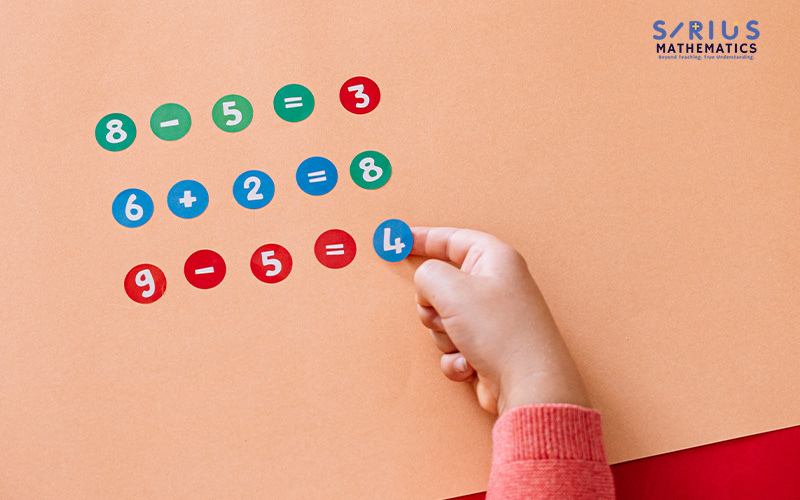
As part of early math education techniques, counters, base-ten blocks, number lines, and ten frames make abstract ideas visible. These tools help pupils see place value, regrouping, and part–whole relationships before moving to symbolic notation.
- Promote Multiple Strategies, Not One “Right” Way
Invite pupils to share different approaches (e.g., making ten, compensating, bar models) and explain why they work. Comparing methods builds flexible number thinking and deepens conceptual understanding.
- Run Short Number Talks and Discussions
In short daily routines, students reason out loud, justify estimates, and evaluate explanations. This strengthens mathematical language and confidence, while nurturing an intuitive sense of reasonableness.
2. At Home: How Can Families Make Maths Part of Everyday Life?
- Play-based Learning
Dice, cards, and board games build fluency and pattern recognition in a low-pressure setting. For instance, parents can add two dice and encourage their child to compare values.
- Everyday Maths Moments
Daily tasks show that numbers matter more than worksheets. Involve your child in simple decisions that use measurement, estimation, and comparison. For example, encourage them to estimate grocery totals, compare unit prices, and plan pocket-money budgets.
- Mental Checks and Estimation
Encourage quick “sense checks”: Does that answer seem reasonable? About how much should it be? Regular estimation exercises strengthen numerical intuition and confidence with mental maths.
How Can Tuition Reinforce Number Sense?
While classroom learning sets the foundation, some students benefit from targeted support to fully internalise concepts and close specific gaps. High-quality math enrichment programmes in Singapore offer structured, concept-first instruction that strengthens numerical fluency. In addition, working with an experienced maths tutor in Singapore further accelerates progress through guided discussions, strategy practice, and mental-maths routines.
At Sirius Mathematics, our small-group lessons focus on building number awareness and conceptual mastery. Students benefit by:
- Practising mental maths strategies and flexible methods rather than memorising a single procedure.
- Applying the Concrete–Pictorial–Abstract (CPA) approach with manipulatives and bar models to anchor understanding.
- Taking part in guided number talks and structured error analysis to build reasoning and resilience.
Frequently Asked Questions
1. What is number sense in simple terms?
It refers to a child’s ability to understand numbers and how they work. It includes skills like estimating, using mental maths, recognising patterns, and knowing if answers “make sense.”
2. Why is number awareness important for my child’s maths learning?
Without this awareness, children may rely too much on memorisation and struggle with problem-solving. A strong numerical literacy helps them approach maths flexibly, which is especially important in Singapore’s PSLE-style questions.
3. Is number sense part of the MOE math syllabus?
Yes. While not explicitly listed as a subject, numerical literacy is embedded in the foundation of the Singapore Maths Framework, especially in areas like problem-solving, number bonds, and model drawing.
Conclusion
Number sense is a fundamental maths skill that goes beyond exam performance, laying the foundation for confident and capable learners. Early support in building this skill sets students on a path to mathematical proficiency.
At Sirius Mathematics, our curriculum is closely aligned with the MOE’s Assessment Objectives. This means we meticulously tailor our teaching methods and resources to meet these standards. Through customised worksheets that target these objectives, our PSLE Maths tuition engages primary school students in developing critical maths skills, helping them master fundamental maths ideas with ease.
Contact us to sign up for our lessons.